

What Provides More Textile Fibers Than Animals Or Minerals?
Contents
Cobweb Nomenclature
Natural Fibers
Human-made Fibers
Textile Fiber Parameters
Cobweb Properties – Comparison
Introduction
Textiles have such an important bearing on our daily lives that everyone should know something virtually the basics of fibers and their properties.
Textile fibers are used for a broad range of applications such as roofing, warmth, personal beautification and even to brandish personal wealth.
Material technology has come a long style in meeting these requirements. A bones cognition of textile fibers volition facilitate an intelligent appraisal of cobweb brands and types and aid in identifying the right quality for the awarding.
This bulletin covers various fabric fibers and the properties that are important for a suitable textile application.
Cobweb Classification
Textile fibers can be broadly classified into 2 categories:
- Natural fibers
- Man-fabricated fibers
Natural Fibers
Natural fibers are subdivided further, as outlined beneath, by their origin.
Tabular array below when available.
Human being-made Fibers
Human being-made fibers are subdivided equally shown below with their diverse compositions and origin.
| Fiber Name | Source |
|---|---|
| Cellulosic | |
| Rayon | Cotton linters or wood |
| Acetate | Cotton linters or wood |
| Tri-acetate | Cotton fiber linters or woods |
| Non-Cellulosic Polymers | |
| Nylon | Aliphatic polyamide |
| Aramid | Aromatic polyamide |
| Polyester | Dihydric alcohol and terephthalic acid |
| Acrylic | Acrylonitrile |
| Modacrylic | Acrylonitrile |
| Spandex | Polyurethane |
| Olefin | Ethylene or propylene |
| Vinyon | Vinyl chloride |
| Saran | Vinylidene chloride |
| Novoloid | Phenol based navolac |
| Polycarbonate | Carbonic acrid (polyester derivative) |
| Fluorocarbon | Tetrafluoroethylene |
| Protein | |
| Azlon | Corn, soybean, etc. |
| Rubber | |
| Rubber | Natural or synthetic rubber |
| Metal | |
| Metal | Aluminum, silver, gold, stainless steel |
| Mineral | |
| Glass | Silica sand, limestone, other minerals |
| Ceramic | Aluminum, silica |
| Graphite | Carbon |
i. Natural Fibers
Cotton wool
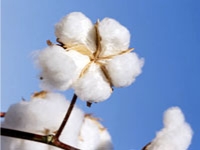
Cotton, the natural fiber nearly widely used in clothes, grows in a boll around the seeds of cotton plants. A single fiber is an elongated cell that is a flat, twisted, hollow, ribbon-like structure.
Characteristics
- Fair to skillful forcefulness
- Very piffling elasticity
- Less resilient and prone to wrinkling
- Comfy and soft feel
- Adept absorbency
- Conducts heat well
- Damaged by insects, mildew, rot and moths
- Weakened past extended sunlight exposure
Applications
- Widely used in number of textile products
- Commonly used in woven and knitted clothes
- Home textile – bath towels, bath robes, bed covers etc.
- Used as a blend with other fibers equally rayon, polyester, spandex etc.
Linen
Linen, i of the about expensive natural fibers, is made from the flax plant. Information technology is labor-intensive to produce, hence produced in small-scale quantities. Nevertheless linen fabric is valued for its exceptional coolness and freshness in hot weather.
Information technology is equanimous of 70% cellulose and thirty% pectin, ash, woody tissue and moisture.
Characteristics
- Strongest vegetable fiber
- Poor elasticity, hence wrinkles easily
- Relatively smooth, becomes softer when washed
- Highly absorbent
- Good conductor of oestrus and feels absurd
- Lustrous
- More than brittle, constant creasing in the sharp folds, tends to break
- Damaged by mildew, perspiration and bleach
- Resistant to moths and carpet beetles
Applications
- Apparel - suits, dresses, skirts, shirts etc.
- Abode and commercial furnishing items – table cloths, dish towels, bed sheets, wallpaper / wall coverings, window treatments etc.
- Industrial products - luggage, canvas etc.
- Used every bit blend with cotton
Wool
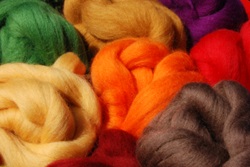
Wool cobweb grows from the skin of sheep and is a relatively coarse and crimped fiber with scales on its surface. Information technology is composed of protein. The fiber appearance varies depending on the brood of the sheep. Finer, softer and warmer fibers tend to exist with more and smoother scales. Thicker, less warm fibers have fewer and rougher scales. Normally, the better wool fibers with effectively scales are duller in appearance than the poorer quality fibers which have fewer scales.
Characteristics
- Crimped in advent
- Elastic
- Hygroscopic, readily absorbs moisture
- Ignites at a college temperature than cotton
- Lower rate of flame spread, heat release and combustion heat
- Resistant to static electricity
Applications
- Clothing – jackets, suits, trousers, sweaters, hats etc.
- Blankets, carpets, felt and upholstery
- Horse rugs, saddle cloths
Silk
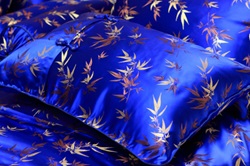
Silk is a fine, continuous strand unwound from the cocoon of a moth caterpillar known as the silkworm. It is composed of protein. Information technology is very shiny due to the triangular prism-like structure of the silk fiber, which allows silk cloth to refract incoming lite at different angles.
Characteristics
- Lustrous, smooth and soft texture and not slippery
- Lightweight, strong, but can lose up to 20% of its force when wet
- Elasticity is moderate to poor. If elongated, it remains stretched
- Can be weakened if exposed to also much sunlight
- May be affected by insects, especially if left dirty
- Tin can regain up to 11% of its moisture
Applications
- Shirts, ties, blouses, formal dresses, high-fashion apparel
- lingerie, pajamas, robes, dress suits and sunday dresses
- Many furnishing applications
- Upholstery, wall coverings, and wall hangings
Other Natural Fibers
Jute
Jute is taken from a tall institute of the same name and information technology is easy to cultivate and harvest. It is the cheapest fiber and is used in corking quantities.
Characteristics
- It is not durable as it deteriorates rapidly when exposed to wet
- Less strength
- Cannot be bleached to go far pure white due to lack of force
Applications
- Bounden threads for carpets, coarse and inexpensive fabrics, heavy bagging etc.
Kapok
It is a white hair-like fiber obtained from the seed capsules of plants and trees chosen Ceiba Pen Tandra grown in Java and Sumatra (Republic of indonesia), United mexican states, Central America and the Caribbean, Northern S America and tropical West Africa.
Information technology is called silk cotton due to its high luster which is equal to that of silk.
Characteristics
- Shine texture
- Very lustrous
- Weak
- Short fiber length
- Resistant to moisture, dries chop-chop when wet
Applications
- Mattresses, cushions, upholstered article of furniture
Ramie
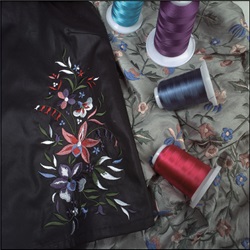
A woody cobweb resembling flax and it is also known equally rhea and Prc grass. It is taken from a tall angiosperm.
Characteristics
- Stiff
- More breakable
- Lustrous
Applications
- Canvas, upholstery, article of clothing, etc.
2. Human being-made Fibers
two.1. Man-made (Regenerated)
Cellulosic
They are derived either from the cellulose of the cell walls of short cotton fibers that are called linters or, more frequently from pine woods. There are 3 types of man made cellulosic fibers: Rayon, acetate and tri-acetate.
Rayon
Rayon [link to Raylon] is fabricated from naturally occurring polymers that simulate natural cellulosic fibers. It is neither a truly synthetic cobweb nor a truly natural fiber.
There are ii varieties of Rayon; viscose and high wet modulus (HWM). These in plough are produced in a number of types to provide certain specific properties.
Characteristics
- Soft, smooth and comfortable
- Naturally high in luster
- Highly absorptive
- Durability and shape retention is low, especially when wet
- Low elastic recovery
- Normally weak, but HWM rayon is much stronger, durable and has practiced appearance retentiveness.
Applications
- Dress - blouses, dresses, jackets, lingerie, linings, suits, neck ties etc.
- Furnishing items - bedspreads, bed sheets, blankets, window treatments, upholstery etc.
- Industrial uses due east.k. medical surgery products, non-woven products, tire cord etc.
- Other uses - feminine hygiene products, diapers, towels etc.
Acetate
Acetate consists of a cellulose chemical compound identified equally acetylated cellulose – a cellulose common salt. Hence information technology possesses different qualities compared to rayon.
Acetate is thermoplastic and tin exist formed into any shape past awarding of pressure combined with heat. Acetate fibers accept good shape retentiveness.
Characteristics
- Thermoplastic
- Good drapability
- Soft, smooth and resilient
- Wicks and dries speedily
- Lustrous appearance
- Weak, rapidly loses strength when moisture, must be dry-cleaned
- Poor abrasion resistance
Applications
- Primarily in apparel - blouses, dresses, jackets, lingerie, linings, suits, neck ties, etc.
- Used in fabrics such as satins, brocades, taffetas, etc.
Tri-acetate
Tri-acetate consists of acetylated cellulose that retains acetic groupings, when it is being produced as triacetate cellulose. Information technology is a thermoplastic cobweb and is more resilient than other cellulosic fibers
Characteristics
- Thermoplastic
- Resilient
- Shape retentive and wrinkle resistant
- Shrink resistant
- Easily washable, even at higher temperatures
- Maintains creases and pleats well
Applications
- Primarily apparel
- Used in wear where crease / pleat retention is of import eastward.g. skirts and dresses
- Can be used with polyester to create shiny apparel
2.2. Human-fabricated – Non-cellulosic
Polymer Fibers
This grouping of fibers is distinguished by beingness synthesized or created from diverse elements into larger molecules that are called linear polymers.
The molecules of each particular compound are arranged in parallel lines in the fiber. This arrangement of molecules is called molecular orientation.
The properties of such fibers are dependent on their chemic composition and kinds of molecular orientation.
Nylon
In nylon, the fiber forming substance is a long-concatenation synthetic polyamide in which less than 85% of the amide linkages are attached straight to ii aromatic rings. The elements carbon, oxygen, nitrogen and hydrogen are combined by chemic processes into compounds which react to form long-concatenation molecules, chemically known equally polyamides and are and then formed into fibers. At that place are several forms of nylon. Each depends upon the chemical synthesis.
They are: Nylon iv; vi; 6.6; 6.10; 6.12; 8; 10; and xi.
Characteristics
- Highly resilient
- High elongation and elasticity
- Very potent and durable
- Excellent abrasion resistance
- Thermoplastic
- Has the ability to be very lustrous, semi-lustrous or tedious
- Resistant to insects, fungi, mildew and rot
Applications
- Apparel – pantyhose, stockings, leggings, etc.
- Domicile furnishing
- Industrial applications - parachutes, tyre cords, ropes, airbags, hoses, etc.
Polyester
In polyester, the fiber forming substance is any long-chain constructed polymer composed of at least 85% by weight of an ester of a substituted aromatic carboxylic acid, but not restricted to substituted terephthalate units and para-substituted hydroxybenzoate units.
In producing such fibers, the basic elements of carbon, oxygen and hydrogen are polymerized. Variations are possible in the methods of product, in the combination of ingredients and in the ultimate molecular structures of the fiber forming substance.
Characteristics
- Thermoplastic
- Good forcefulness
- Hydrophobic (non absorbent)
Applications
- Apparel – woven and knits, shirts, pants, jackets, hats etc.
- Home furnishing – bed sheets, blankets, upholstered furniture, cushioning textile
- Industrial uses – conveyor belts, rubber belts, tyre reinforcement
Spandex
The fiber forming substance used to produce spandex is any long-chain synthetic polymer composed of at least 85% of segmented polyurethane. Variations are possible when producing this cobweb.
The bones elements of nitrogen, hydrogen, carbon and oxygen are synthesized with other substances to ethyl ester compounds in polymer chains of soft segments or sections that provide stretch and harder segments that hold the chain together.
Trademarks of iii spandex fibers are Articulate-span, Glospan and Lycra.
Characteristics
- Highly elastic
- Comfy
- High shape retentivity
- Durable
Applications
- Never used alone, but ever blended with other fibers
- Wearing apparel and clothing items with stretch for condolement and fit
- Hosiery
- Foundation garments
- Swimwear, athletic, aerobic wearing apparel
- Lingerie, leggings and socks
- Shaped garments e.chiliad. bra cups
- Gloves
Acrylic
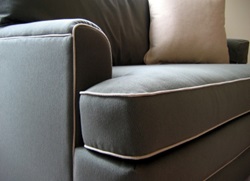
In acrylics, the cobweb forming substance is any long chain polymer composed of at least 85% past weight of acrylonitrile units. Using complicated processes, carbon, hydrogen and nitrogen, the bones elements are synthesized with pocket-size amounts of other chemicals into larger polymer combinations. Variations are possible in the methods of product, in the combination of ingredients and in the ultimate molecular structures of the cobweb forming substance.
Characteristics
- Soft, warm treatment characteristics similar to wool
- Resilient
- Shape retentive
Applications
- Apparel
- Home furnishing
three. Man-made – Protein Fibers
The poly peptide from such products as corn and milk has been processed chemically and converted into fiber. All the same, such fibers are not commercially successful.
four. Human-made – Rubber Fibers
The fiber forming substance is comprised of natural and constructed rubber. The treated rubber is produced in strands, so that the cross-section is either circular or foursquare and the longitudinal surface is relatively smooth.
5. Man-made – Metallic Fibers
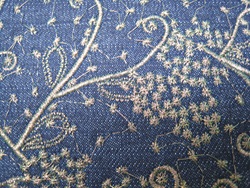
These fibers are equanimous of metal, plastic-coated metallic, metallic-coated plastic, or a core completely covered by metal. These fibers are usually produced in apartment, narrow, polish strips which possess loftier luster.
Applications
- Decorative yarns in dress and home furnishing items.
6. Man-made – Mineral Fibers
Various minerals have been manufactured into glass, ceramic and graphite fibers having prescribed properties for specific uses.
Glass
Although glass is a hard and inflexible material, information technology can be made into a fine, translucent material fiber that has an appearance and feel of silk.
Natural minerals such as silica sand, limestone, soda ash, borax, boric acid, feldspar and fluorspar have been fused under very high temperatures into glass which is processed into a fiber.
Characteristics
- Inert
- Highly flame resistant
Applications
- Heat resistant industrial applications
Textile Fiber Parameters
Fibrous materials should possess sure backdrop to become a suitable textile raw material. Properties which are essential for acceptance as a suitable raw textile may be classified every bit 'primary properties'. The other properties which add together specific desirable grapheme or aesthetics to the end product and its utilize may be classified as 'secondary backdrop'.
Primary Properties
ane. Length
2. Tenacity (strength)
3. Flexibility
4. Cohesion
five. Uniformity of properties
Secondary Properties
1. Physical shape
2. Specific gravity (influence weight, cover etc.)
3. Moisture regain and absorption (comfort, static electricity etc.)
four. Elastic character
5. Thermo plasticity (softening point and heat - gear up grapheme)
six. Dyeability
7. Resistance to solvents, corrosive chemicals, micro-organisms and environmental conditions
8. Flammability
9. Luster
Concrete Properties
Cotton
| Property | Characteristics |
|---|---|
| Microscopic appearance | Apartment, twisted and ribbon-like |
| Length | Staple fiber, length ranges from i to 5.5 cm |
| Color | Flossy white in natural form, unless treated |
| Luster | Medium, unless treated for luster |
| Strength | Fair |
| Elasticity | Low |
| Resilience | Depression |
| Moisture assimilation | Excellent |
| Heat | Will withstand moderate rut / Decomposes after prolonged exposure to temperatures of 150°C / 320°F or over |
| Flammability | Burns readily |
Linen
| Holding | Characteristics |
|---|---|
| Microscopic appearance | Cantankerous-section is made up of irregular polygonal shapes |
| Length | Long staple, 25 to 120 cms |
| Colour | Off white |
| Lustre | High |
| Strength | Good |
| Elasticity | Depression |
| Resilience | Little |
| Moisture absorption | Practiced |
| Rut | Will withstand moderate heat |
| Flammability | Scorches and flames readily |
Wool
| Holding | Characteristics |
|---|---|
| Microscopic appearance | Crimped |
| Length | Staple cobweb, upwards to 40 cms |
| Color | More often than not creamy white, some breeds of sheep produce natural colors such as black, brown, silver, and random mixes. |
| Luster | Loftier |
| Strength | High |
| Elasticity | Practiced |
| Resilience | Loftier |
| Moisture absorption | Tends to repel initially, just skilful assimilation. |
| Rut | Becomes harsh at 100°C / 212°F, decomposes at slightly college temperatures. |
| Flammability | Scorches at 204°C / 400°F, will char |
Silk
| Property | Characteristics |
|---|---|
| Microscopic appearance | Triangular prism-like construction |
| Length | Continuous filament |
| Color | Commonly off white, and also shades of pale beige, brown, and grey |
| Lustre | Excellent |
| Strength | Skilful |
| Elasticity | High |
| Resilience | High |
| Moisture assimilation | Good |
| Heat | Sensitive and gets decomposed |
| Flammability | Burns at 165°C / 330°F |
Rayon
| Property | Characteristics |
|---|---|
| Microscopic appearance | Striations seen in viscose and high force rayon If delustred, scattered specks of pigment can be seen |
| Length | Filament and Staple |
| Colour | Transparent unless dyed |
| Lustre | High |
| Strength | Fair to excellent |
| Elasticity | Regular rayon: low |
| Resilence | Loftier wet strength rayon is better |
| Moisture absorption | Higher than natural cellulose |
| Oestrus | Loses strength above 148°C / 300°F |
| Flammability | Burns chop-chop unless treated |
| Conductivity | Fair – static accuse tin be reduced with special finishes |
Acetate
| Property | Characteristics |
|---|---|
| Microscopic appearance | Striations further apart than viscose rayon |
| Length | Filament and staple |
| Colour | Transparent unless dulled by pigments |
| Lustre | Bright, semi bright or dull |
| Strength | Moderate, less than rayon when it is moisture |
| Elasticity | Not very loftier, similar to rayon |
| Resilience | Poor |
| Moisture absorption | 6%, little forcefulness loss when it is wet |
| Estrus | Ironing temperatures of 135°C / 275°F are satisfactory |
| Flammability | Slowly combustible |
| Electrical conductivity | Proficient |
Nylon
| Property | Characteristics |
|---|---|
| Microscopic advent | Very smooth and even |
| Length | Filament and staple |
| Color | Off white |
| Luster | High natural luster that tin exist controlled |
| Strength | Exceptionally loftier |
| Elasticity | Exceptionally loftier |
| Resilience | Very good |
| Moisture absorption | iii.8% |
| Heat | Loftier resistance, melts at 250°C / 482°F |
| Flammability | Melts slowly Does non back up combustion |
| Conductivity | Low, generates static |
Polyester
| Property | Characteristics |
|---|---|
| Microscopic appearance | Polish, even, rod similar, unlike cross sectional shapes |
| Length | Filament and staple |
| Color | White |
| Luster | Vivid or dull |
| Strength | Skilful to excellent |
| Elasticity | Fair to good |
| Resilience | Excellent |
| Wet assimilation | Less than i% |
| Estrus | Softening or sticking temperature is in a higher place 204°C / 400°F |
| Flammability | Burns slowly |
| Electric conductivity | Accumulates static charges |
Acrylic
| Belongings | Characteristics |
|---|---|
| Microscopic appearance | Uniform and smooth surface Irregular spaced striations |
| Length | Mainly a staple cobweb |
| Color | White |
| Lustre | Bright or slow |
| Strength | Fair to good strength |
| Elasticity | Practiced |
| Resilience | Skillful |
| Moisture absorption | 1 - iii% |
| Heat | Yellowing may occur in a higher place 148°C / 300°F |
| Flammability | Burns with yellow flame |
| Conductivity | Fair to proficient |
Cobweb Properties - Comparison
Absorbency
| Fiber | Moisture regain* |
| Cotton wool | 7 -eleven |
| Flax | 12 |
| Silk | eleven |
| Wool | thirteen - xviii |
| Acetate | 6.0 |
| Acrylic | 1.3 - 2.5 |
| Aramid | 4.5 |
| Glass | 0 - 0.3 |
| Nylon | iv.0 - 4.v |
| Polyester | 0.4 - 0.viii |
| Rayon | 15 |
| Rayon HWM | 11.5 - 13 |
| Spandex | 0.75 - one.3 |
*Wet regain is expressed equally a percentage of the wet-free weight at 70º Fahrenheit and 65% relative humidity.
Thermal properties
| Fiber | Melting Signal | Softening Sticking Point | Condom Ironing Temperature | ||||
|---|---|---|---|---|---|---|---|
| ˚F | ˚C | ˚F | ˚C | ˚F | ˚C | ||
| Cotton | Non melting | 425 | 218 | ||||
| Flax | Not melting | 450 | 232 | ||||
| Silk | Not melting | 300 | 149 | ||||
| Wool | Not melting | 300 | 149 | ||||
| Acetate | 446 | 230 | 364 | 184 | 350 | 177 | |
| Acrylic | 400 - 490 | 204 - 254 | 300 - 350 | 149 - 176 | |||
| Aramid | Does not melt, carbonizes in a higher place 426°C / 800°F | ||||||
| Glass | 1400 - 3033 | ||||||
| Nylon six | 414 | 212 | 340 | 171 | 300 | 149 | |
| Nylon 66 | 482 | 250 | 445 | 229 | 350 | 177 | |
| Polyester PET | 480 | 249 | 460 | 238 | 325 | 163 | |
| Polyester PCDT | 550 | 311 | 490 | 254 | 350 | 177 | |
| Rayon | Non melting | 375 | 191 | ||||
| Spandex | 446 | 230 | 347 | 175 | 300 | 149 | |
Furnishings of Acids
| Fiber | Beliefs |
|---|---|
| Cotton fiber | Disintegrates in hot dilute and cold concentrated mineral acids |
| Linen | Disintegrates in hot dilute and cold concentrated acids |
| Wool | Destroyed past hot Sulphur, otherwise unaffected past acids |
| Silk | Organic acids do non impairment, concentrated mineral acids will dissolve |
| Rayon | Disintegrates in hot dilute and cold concentrated acids |
| Acetate | Soluble in acetic acid, decomposed by strong acids |
| Tri-acetate | Soluble in acerb acid, decomposed by strong acids |
| Nylon | Decomposed by strong mineral acids, resistant to weak acids |
| Polyester | Resistant to nearly mineral acids; disintegrated by 96% Sulphur acid |
| Spandex | Resistant to about mineral acids, some discoloration can happen |
| Acrylic | Resistant to most acids |
| Glass | Resistant to most acids |
Effects of Alkalis
| Cobweb | Behavior |
| Cotton | Non harmed past alkalis |
| Linen | Highly resistant |
| Wool | Attacked past weak alkalis, destroyed by strong alkalis |
| Silk | Damaged only nether high temperature and concentration |
| Rayon | Disintegrates in concentrated solutions |
| Acetate | Not affected, unless high concentration and temperature is practical |
| Tr-acetate | Not affected, unless high concentration and temperature is applied |
| Nylon | Little or no effect |
| Polyester | Resistant to common cold alkalis, slowly decomposed at a eddy by strong alkalis |
| Spandex | Affected |
| Acrylic | Destroyed past stiff alkalis at eddy, resists weak alkalis |
| Glass | Attacked by hot weak alkalis and concentrated alkalis |
Effects of Organic Solvents
| Cobweb | Behavior |
| Cotton wool | Oxidises, turning yellowish and losing strength on long exposure |
| Linen | Resistant than cotton, gradually deteriorate from prolonged exposure |
| Wool | Strength loss due to prolonged exposure |
| Silk | Continuous exposure weakens |
| Rayon | More often than not resistant, loses strength after long exposure |
| Acetate | Approximately same every bit rayon |
| Tri-acetate | Resistant, loses strength after long exposure |
| Nylon | Good resistance |
| Polyester | Good resistance |
| Spandex | Generally non affected, prolonged exposure weakens |
| Acrylic | Piddling or no effect |
Effects of Sunlight
| Fiber | Beliefs |
| Cotton | Oxidises, turning yellow and losing strength on long exposure |
| Linen | Resistant than cotton, gradually deteriorate from prolonged exposure |
| Wool | Strength loss due to prolonged exposure |
| Silk | Continuous exposure weakens |
| Rayon | More often than not resistant, loses strength after long exposure |
| Acetate | Approximately aforementioned as rayon |
| Tri-acetate | Resistant, loses strength after long exposure |
| Nylon | Adept resistance |
| Polyester | Good resistance |
| Spandex | Generally not affected, prolonged exposure weakens |
| Acrylic | Little or no effect |
Cleanliness and Washability
| Fiber | Behavior and effect |
| Cotton | Launders well and gives upward dirt easily |
| Linen | Launders well and gives up dirt easily |
| Wool | Attracts dirt, unless thoroughly cleaned it retains odors |
| Silk | Prevents dirt from settling. Shine surface allows stains to exist easily done away |
| Rayon | Prevents dirt from settling. Shine surface allows stains to be easily done away |
| Acetate | Prevents clay from settling. Smooth surface allows stains to be easily washed abroad |
| Tri-acetate | Prevents dirt from settling. Smooth surface allows stains to exist easily washed away |
| Nylon six.6 | Prevents dirt from settling. Smooth surface allows stains to be easily washed away |
| Polyester | Prevents clay from settling. Smooth surface allows stains to be easily washed away |
| Spandex | Launders well |
| Acrylic | Launders well |
Effects of Perspiration
| Fiber | Beliefs |
| Cotton | Resistant to brine perspiration, slight deteriorating effect with acid perspiration |
| Linen | Resistant to alkali perspiration, slight deteriorating outcome with acid perspiration |
| Wool | Weakened by brine perspiration Discoloration happens in general with perspiration |
| Silk | Deteriorates and Colour is affected causing stains |
| Rayon | Fairly resistant to deterioration |
| Acetate | Expert resistance |
| Tri-acetate | Good resistance |
| Nylon 6.6 | Resistant, Colour may be affected |
| Polyester | Resistant |
| Spandex | Proficient resistance to degradation |
| Acrylic | No deterioration |
*Perspiration can be acidic or alkaline, depending on the individual's metabolism.
Effects of Mildew
| Cobweb | Behavior and effect |
| Cotton | Afflicted in a damp condition |
| Linen | Affected in a damp status |
| Wool | Non susceptible in ordinary condition, but in clammy status |
| Silk | Non susceptible in ordinary status, but in damp condition |
| Rayon | Affected in a clammy condition |
| Acetate | Highly resistant |
| Tri-acetate | Extremely high resistance |
| Nylon | No effect |
| Polyester | Absolutely resistant |
| Spandex | Skilful to excellent resistance |
| Acrylic | May form, just will have no effect Tin be easily wiped off |
Effect of Heat
| Cobweb | Behavior and outcome |
| Cotton | Withstand moderate heat Will scorch and burn down with prolonged exposure to high heat |
| Linen | Withstand moderate estrus Will scorch and fire with prolonged exposure to high heat |
| Wool | Not easily combustible, becomes harsh at 100°C / 212°F and will scorch at 204°C / 400°F and eventually char |
| Silk | Sensitive to rut, decomposes at 165°C / 330°F |
| Rayon | Behaves similar to cotton equally a cellulosic fiber |
| Acetate | Thermoplastic in nature, gets sticky at 176°C / 350°F and becomes strong later |
| Tri-acetate | Thermoplastic in nature, gets sticky at 298°C / 570°F and becomes potent later |
| Nylon | Will melt under loftier temperature, Nylon half dozen melts at 215°C / 420°F and Nylon 6, 6 248°C / 480°F |
| Polyester | Volition melt under high temperature Becomes sticky at 226°C / 440°F to 243°C / 470°F and melts and flames at 248°C / 480°F to 290°C / 554°F depending on its type |
| Spandex | Yellows and loses elasticity and forcefulness at over 148°C / 300°F, sticks at 175°C / 347°F and melts at 230°C / 446°F |
| Acrylic | Becomes sticky at 229°C / 455°F and melts at higher temperature |
Effects of Insects
| Cobweb | Behavior and effect |
| Cotton | Non damaged |
| Linen | Non damaged |
| Wool | Vulnerable to moths and carpeting beetles |
| Silk | May exist attacked by larvae of cloth moths or carpet beetles |
| Rayon | Not attracted |
| Acetate | Not attracted |
| Tri-acetate | Not attracted |
| Nylon | Unaffected |
| Polyester | Unaffected |
| Spandex | Unaffected |
| Acrylic | Unaffected |
Source: https://coats.com/en-US/information-hub/Know-About-Textile-Fibres
Posted by: brooksimalk1993.blogspot.com
0 Response to "What Provides More Textile Fibers Than Animals Or Minerals?"
Post a Comment